For people who have lost most or all of their teeth, the choice often comes down to two broad options: removable dentures or implant-supported replacement teeth.
Traditional dentures still serve many patients well, yet more Australians are asking about fixed full-arch implant treatment because it can offer greater stability, stronger bite function and a more natural day-to-day feel for suitable candidates. Dentures rest on the gums, while dental implants are placed in the jawbone and used to support replacement teeth.
Quick comparison
| Factor | All-on-4 or full-arch implants | Traditional dentures |
| Fit | Fixed in place | Removable |
| Support | Anchored by implants in bone | Rests on gums |
| Stability | Usually more secure | May shift over time |
| Maintenance | Daily cleaning and reviews | Daily removal and cleaning |
| Treatment time | Multi-stage treatment | Usually quicker at the start |
| Suitability | Depends on oral health and bone | Broader non-surgical option |
Why more Melbourne patients are comparing implants and dentures
This comparison is no longer limited to appearance. People want to know how they will eat, speak and manage everyday life. A denture may restore function, but some wearers grow tired of movement, pressure points and the ongoing need for adjustments. That is one reason interest in all-on-4 dental implants continues to grow. People are often not looking for a trend. They are looking for something that feels more dependable.
What are traditional dentures?
Traditional dentures are removable appliances used to replace missing teeth. Full dentures replace all teeth in the upper or lower jaw, and they rest on the gums. Partial dentures replace some missing teeth and are usually held in place by clasps attached to the remaining teeth. Healthdirect notes that dentures can improve speech and chewing, but they do not replace tooth roots.
Dentures may suit people who:
- want a non-surgical option
- need a lower upfront cost
- prefer a simpler treatment pathway
- are not suitable candidates for implant surgery
What is All-on-4 implants?
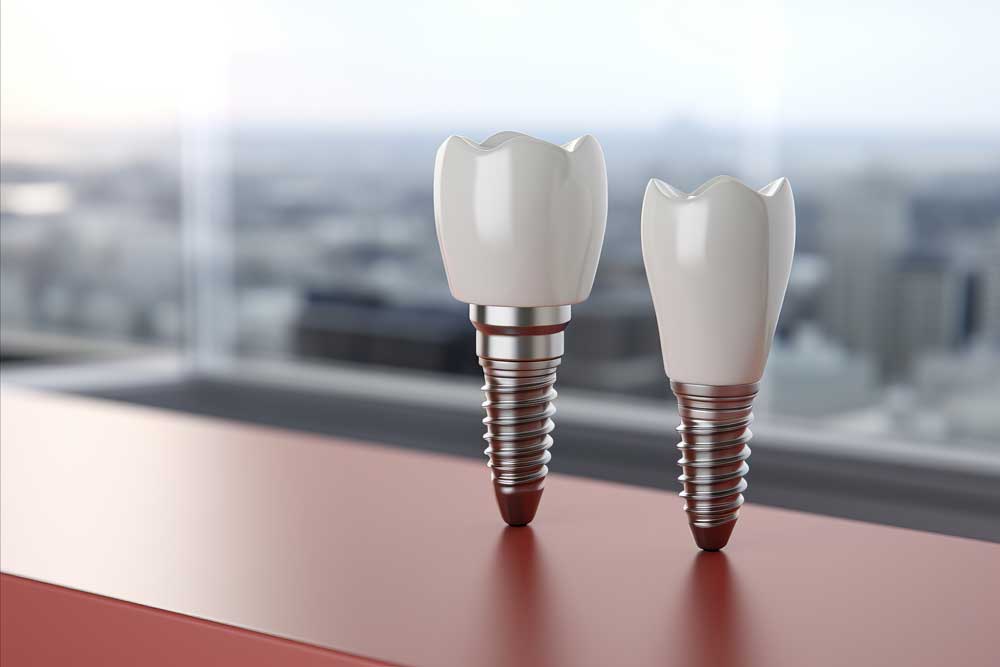
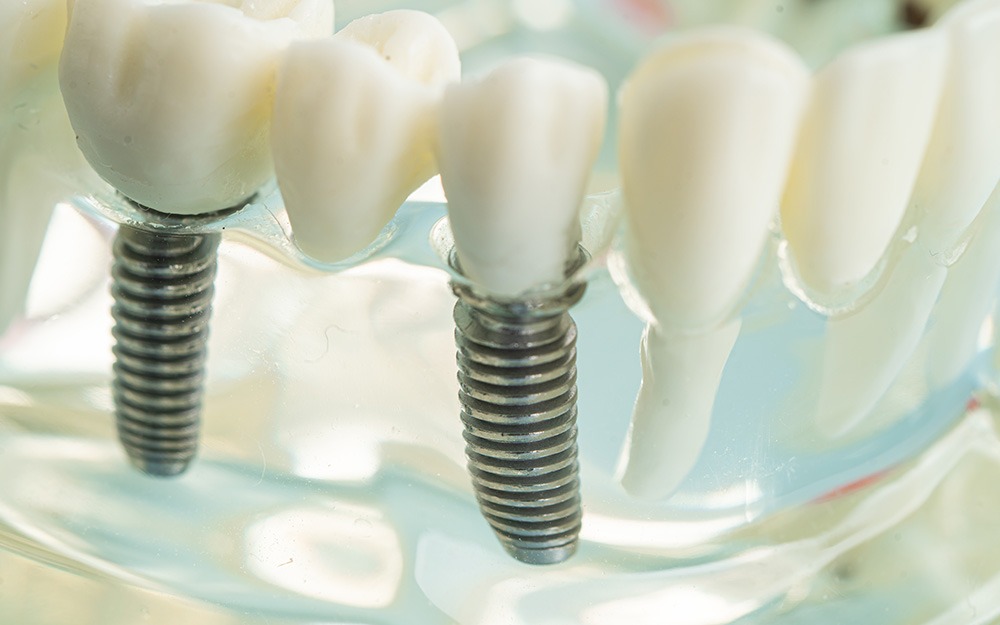
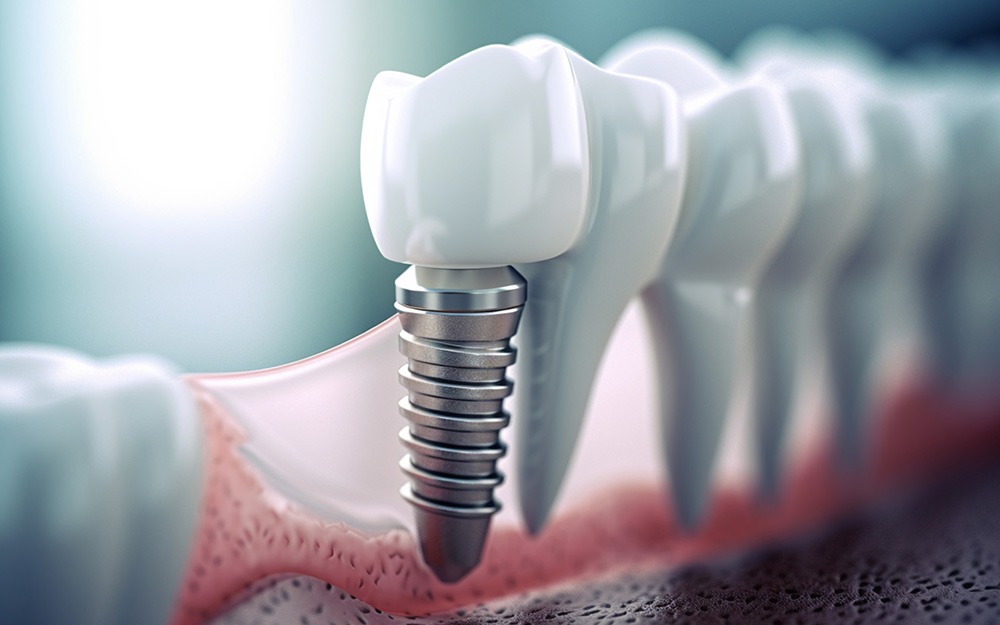
All-on-4 is a form of implant-supported full-arch treatment in which a complete set of replacement teeth is supported by a small number of implants. The key distinction is that the new teeth are fixed rather than removable. Implants are placed into the jawbone and then given time to heal and integrate with the bone before the final restoration is fitted.
What is a full arch restoration?
A full arch restoration refers to replacing an entire upper or lower set of teeth. It may involve a fixed implant-supported bridge or, in some cases, an implant-retained denture.
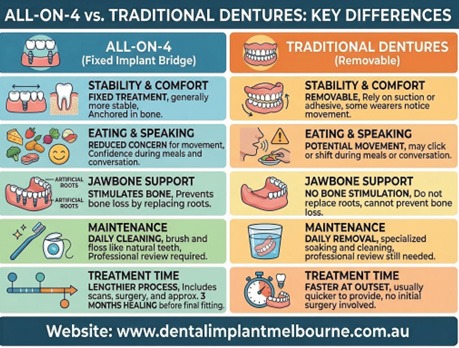
All-on-4 vs. traditional dentures: The key differences
Several practical differences shape this decision:
- Stability and comfort: Fixed implant bridges are generally more stable than removable dentures because they are anchored in bone.
- Eating and speaking: Dentures can restore function, though some wearers notice movement during meals or conversation. Fixed treatment may reduce that concern for suitable patients.
- Jawbone support: Implants sit in the jaw and work more like artificial roots. Dentures do not replace roots, so they do not provide the same kind of bone stimulation.
- Maintenance: Both options need ongoing care. Fixed teeth still require daily cleaning and professional review.
- Treatment time: Dentures are usually faster to provide at the outset. Implant treatment often involves scans, surgery, healing and final fitting over several months. The time taken for healing before the definitive restoration is commonly around three months.
Also Read: How Full Mouth Reconstruction is Made Easy with All on 4 Dental Implants
Who may be a suitable candidate for All-on-4 dental implants?
Suitable candidates for full mouth dental implantsoften include:
- People with many missing teeth
- Patients with failing teeth who need full-arch replacement
- Long-term denture wearers seeking a fixed option
- Patients healthy enough for surgery and committed to maintenance
That said, suitability depends on clinical examination, imaging, gum health, medical history and bone volume. Some patients may need added procedures before implant placement.
What to expect from an All-on-4 consultation and treatment plan
A typical pathway includes:
- Initial consultation and oral assessment
- Scans and treatment planning
- Implant placement
- Healing and review appointments
- Fitting of the final bridge
The timeline differs from case to case, especially where extractions or grafting are needed.
Frequently Asked Questions:
1. What is the average cost of All-on-4 dental implants in Melbourne?
There is no single official Melbourne average. Clinic pricing is approximately $20,900 per arch and may rise depending on materials, grafting, extractions and the final bridge.
2.How long does it take to switch from dentures to All-on-4?
It usually takes more than one visit. Planning, surgery, healing and the final teeth can stretch over several months, with bone healing commonly taking about three months before the final restoration.
3.Are dental implants more comfortable than removable dentures?
Many patients find fixed implant-supported teeth feel more secure than removable dentures, especially for eating and speaking, though comfort still depends on fit, healing and oral hygiene.
4.Can I get dental implants in Melbourne with low bone density?
Possibly. Low bone density does not always rule implants out, but some patients need further assessment or additional procedures before treatment proceeds.
5.How many appointments for full mouth implants in Melbourne?
There is no set number for every patient. Most cases involve consultation, imaging, surgery, review visits and fitting of provisional or final teeth.